
Guide
Marble and natural stone floor care for commercial buildings
A stone floor can outlast the building, but its polish lasts only as long as the cleaning respects the rock underneath. This guide explains the two families of stone, then sets out the care schedule from the first dust mop of the day to the yearly polish.
Request a quoteCall (408) 533-0557
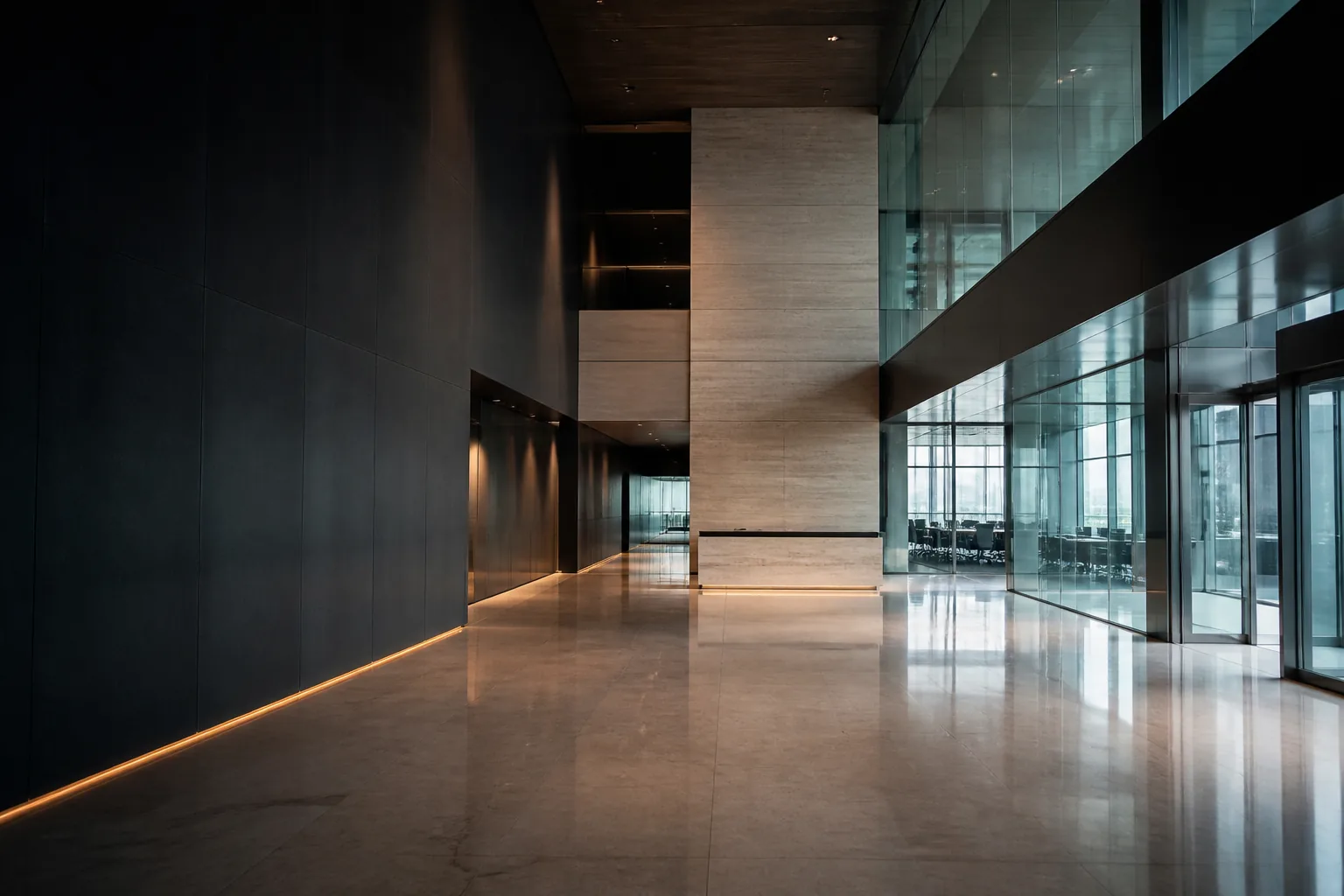
What marble and other natural stone floors are
A natural stone floor is quarried rock, sawn into tiles or slabs, set in mortar over the slab, and finished at the factory or on site. Nothing is printed, poured or pressed. The pattern and color are the rock itself, which is why two pieces from one block never look quite the same.
For cleaning purposes, the stones on this page fall into two families. The family decides which chemicals are safe and how the shine is kept.
- Calcareous stone is built mostly from calcium carbonate. Marble is limestone recrystallized by heat and pressure, dense enough to take a mirror polish. Limestone is the softer, more porous sedimentary parent, usually laid with a honed (matte) face. Travertine is a limestone formed at mineral springs, full of natural holes that are filled with cement or resin before the face is honed or polished. Acids dissolve all three.
- Siliceous stone is built mostly from silica minerals such as quartz and feldspar. Granite is the hard, crystalline example and shrugs off most household acids. Slate splits into thin layers and usually goes down with a textured cleft face rather than a polish.
The surface that daily care protects is the stone’s own face. A polished marble shine is not a coating; it is rock ground and buffed until it is smooth enough to reflect light. Honed stone is ground to a smooth matte instead. Many floors also carry an impregnating sealer, which soaks into the pores to slow staining but leaves nothing on top. Older lobbies sometimes still wear a layer of wax or acrylic that someone added years ago, and that film, not the marble, is what turns yellow and dull.
How long a stone floor lasts
The rock itself is effectively permanent in a lobby. Polycor’s environmental product declaration for granite flooring uses a 75-year reference service life, assumes only monthly cleaning with no resealing, and expects the floor to last as long as the building. The National Association of Home Builders’ study of component life expectancy lists marble, slate and granite floors at about a century. Well-installed stone typically serves seventy-five to a hundred years or more.
The finish runs on a far shorter clock. A polished marble entrance lane can lose its reflection within a few months, and soft limestone shows a worn path even sooner. That wear is fixed by polishing rather than replacement, so the real question for a facility is how often the face must be restored, not when the floor gives out.
What pushes a stone floor toward the long end, or the short end:
- Grit. Sand is harder than marble and limestone, so every step that carries it in acts like fine sandpaper on the polish.
- Matting. Entry mats long enough to take several strides catch most of that sand before it reaches the stone; the entrance matting guide covers sizing.
- Chemistry. One acidic product used daily can etch a whole lobby in weeks. A neutral cleaner used daily adds years between restorations.
- Stone choice. Granite and slate hold up in places where marble and limestone visibly wear, such as revolving doors and elevator thresholds.
- Skipped intervals. Light scratches polish out quickly. Left alone, they deepen until only grinding by a stone restoration specialist removes them.
Where stone floors are used
Stone goes where a building wants to look permanent on the first step inside. In Northern and Central California these are the usual places:
- Hotels: lobbies, front desk areas, ballroom prefunction spaces and guest bathrooms, often polished marble with granite at the doors. Stone in guest areas is part of hotel and managed property floor care.
- Banks and office towers: street lobbies, elevator halls, executive floors and restrooms. Lobby stone sits inside a wider office floor care plan.
- Churches: narthexes, aisles, chancels and baptistries, where the marble or limestone is often decades old. Service timing around worship is in church and religious facility floor care.
- Event venues and clubs: foyers, grand stairs and bar fronts. Turnarounds between bookings are covered by event venue floor care.
- Medical buildings: main lobbies and the public corridors of newer hospitals and surgery centers. Clinical areas around them follow medical facility floor care.
- Retail and dining: jewelry and luxury stores, mall entries, and slate or granite in restaurant dining rooms and patios. Stone near storefronts and tables fits shopping center and retail floor care and restaurant floor care.
Inside the building, stone is concentrated at the entrance, the elevator core and the restrooms, with carpet or resilient tile taking over in the offices and rooms beyond. Slate and flamed granite also run outdoors onto plazas and covered entries, which means the same tiles see rain, leaves and sidewalk grit.
Why facilities choose natural stone
- Service life. A stone floor laid well is rarely torn out for wear. It is restored in place, which spreads its higher installed cost over decades.
- Appearance. Polished marble reads as quality to guests, depositors and congregations, and each tile is unique.
- Hygiene. A hard, dense surface holds no fibers or pile, so soil and spills come off with a mop and a neutral cleaner.
- No coating cycle. Unlike vinyl tile, stone needs no layers of floor finish to stay presentable, so there is no stripping schedule.
- Fire and heat. Stone does not burn, and it stays cool underfoot in summer.
- Grip where it is textured. Honed, flamed and cleft faces give better footing than a polish, which is why they are chosen for entries and ramps.
The tradeoffs are real. Polished stone becomes slick once water or a spill sits on it, hard floors carry sound through an open lobby, and calcareous stones mark easily from acids. A care plan exists mostly to manage those three facts. For grip testing and wet-floor practice, see slip resistance and wet floor safety.
The stone care schedule, interval by interval
These lists suit a stone floor with moderate traffic, such as an office elevator hall, a hotel’s upper-floor landing or a church aisle used through the week. Adjustments for busier and quieter floors follow.
Daily
- Dust mop with a clean, untreated microfiber or cotton mop. Oil-treated mops leave a film that darkens stone and makes polish slippery.
- Damp mop traffic areas with a neutral cleaner labeled safe for stone, changing the water often so dirty solution is not spread back over the floor.
- Wipe spills right away, starting with coffee, juice, soda and wine on marble, limestone and travertine, before the acid has time to etch.
- Vacuum the entrance mats and lift them to clear the sand that collects underneath.
- Check restrooms around toilets and urinals, where acidic restroom products and urine attack marble first.
Weekly
- Machine scrub the lanes with a soft pad and neutral solution, picking it up with a wet vacuum or a small auto scrubber so water does not sit in grout joints or travertine holes.
- Clean the edges and corners by hand, where dust mops and machines leave a dark band.
- Dry buff polished marble with a white pad on a floor machine to keep the reflection between polishings.
- Scrub slate and flamed granite at the entries with a brush, since their texture holds soil that mopping skips.
Monthly
- Scrub the full floor wall to wall, including under movable furniture and planters.
- Walk the floor with a light at a low angle and note etch rings, scratched paths, chipped edges and darkened grout.
- Clean grout lines in restrooms and entries; the grout cleaning guide explains why joints darken first.
- Check felt pads under chairs, stanchions and planters, since metal feet scratch and rust on stone.
Quarterly or twice a year
- Polish marble traffic lanes with a marble polishing compound or fine polishing pads under a slow machine, bringing back the reflection in the paths before wear spreads.
- Deep clean slate, granite and honed limestone with a stone-safe cleaner suited to the soil, followed by a full rinse and extraction.
- Water-test the busiest lanes. A spot that darkens quickly has lost its sealer, so resealing goes onto a stone restoration specialist’s calendar.
Yearly or restorative
- Polish the whole marble floor edge to edge, including the quiet rooms that skipped the quarterly cycle.
- Deep clean every stone area and its grout, then photograph the result so next year’s walkthrough has a baseline.
- Call a stone restoration specialist for scratches a fingernail catches, deep etching, lippage between tiles, cracked or hollow tiles, lost travertine fill and resealing. Honing and grinding remove stone, so they are planned years apart rather than every year.
How traffic changes the intervals
- Heavy (hotel and bank street lobbies, hospital front doors, transit-facing entries): dust mop at least twice a day and more often in the rainy months, damp mop daily, buff two or three times a week and polish marble lanes every quarter.
- Moderate: follow the lists above, with lane polishing twice a year.
- Light (a chancel, a boardroom foyer, a guest bathroom): dust mop daily, damp mop two or three times a week, buff monthly and polish once a year.
Rain, loading docks and a door that opens onto a parking lot move a floor up one level, because each of them brings in more grit. To fit stone into a building-wide plan, see how often to clean commercial floors.
What shortens a stone floor’s life
Stone is rarely worn out by shoes alone. The faster damage comes from habits:
- Acidic products. Vinegar, citrus cleaners, descalers, grout haze removers and many restroom bowl cleaners etch marble, limestone and travertine on contact. The mark is a dull spot in the stone itself, so no amount of mopping removes it.
- All-purpose cleaners. Products made for general hard floors run alkaline and leave a residue that dulls polish and weakens sealer when they are not rinsed off.
- Floor finish meant for vinyl. Acrylic finish on marble hides the stone, yellows, wears unevenly in the lanes and traps soil, and it later has to be removed by a specialist before the stone can be polished.
- Too much water. Flooding limestone, travertine and slate pushes dirty water into the pores and joints, where it leaves rings, mineral bloom and loosened fill.
- Aggressive pads. Stripping and scrubbing pads made for vinyl tile scratch a polished face in one pass.
- Short mats. A single doormat lets grit reach the stone on the next few steps.
- Waiting too long. A polish that is renewed while the lanes are only hazy takes an afternoon. One left until the lanes are deeply scratched needs a stone restoration project.
Signs the floor needs more than routine care
- The traffic lanes stay flat and grey after buffing, while the marble along the walls still reflects.
- Clear rings or dull spots show under a raking light where drinks, plants or cleaners sat.
- A yellow or cloudy film builds up in corners, a sign of an old coating rather than the stone.
- Water dropped on the floor soaks in and darkens the stone within a few minutes.
- Grout is visibly darker than the tile, or the joints are cracked and low.
- Travertine holes have opened up, slate layers are flaking, or tiles sound hollow when tapped.
- Edges of neighboring tiles stand at different heights and catch heels and carts.
The first two signs are the usual call for marble polishing. Coating buildup, worn sealer, open fills, hollow tiles and uneven edges are work for a stone restoration specialist, who hones, grinds, fills and seals.
How Solum helps with marble and stone floors
Solum’s hard floor care covers routine and periodic cleaning of marble, granite, travertine, limestone and slate, machine scrubbing, dry buffing, and marble polishing. The walkthrough identifies each stone and its face, notes any old coating and etched or scratched lanes, and sets the polishing calendar around traffic and the hours when the lobby is quiet. When the floor needs honing, grinding, sealing, filling or tile repair, Solum names that work so it can go to a stone restoration specialist.
Lobbies that pair marble with terrazzo are covered in the terrazzo floor care guide, porcelain look-alikes in the ceramic and porcelain tile guide, and hotel scheduling in the hotel lobby and corridor guide. Budget factors are set out in what commercial floor care costs.
A few useful answers
Quick answers.
How long does a marble or granite lobby floor last?
Polycor’s granite flooring declaration models a 75-year service life with the floor lasting as long as the building, and NAHB data puts marble, slate and granite near a century. The stone outlives its polish many times over; the face is what gets restored.
Why did a spilled drink leave a dull ring on our marble?
Juice, soda, wine and coffee are acidic, and acid dissolves the calcium carbonate in marble. The ring is an etch in the stone, not a stain on top, so cleaning will not lift it. Light etches polish out; deep ones need a stone restoration specialist.
Which stones tolerate acidic spills best?
Granite and slate are siliceous, so ordinary drinks and cleaners do not etch them. Marble, limestone and travertine are calcareous and react to acids. That difference is why granite is the usual choice at busy doors and in food areas.
Will a sealer stop marble from etching?
No. An impregnating sealer slows how fast liquids soak in and stain, but acid still reaches and dissolves the surface. Quick spill cleanup and neutral cleaners prevent etching; the sealer only buys time against stains.
What separates polishing marble from honing it?
Polishing refines the very top of the stone to restore its reflection and removes light wear and shallow etches. Honing grinds the face with abrasives to take out deeper scratches and leaves a matte or satin surface. Honing removes stone, so it is planned far less often and done by a restoration specialist.
How often should a busy hotel lobby’s marble be polished?
A street-facing hotel lobby usually needs its traffic lanes polished every quarter, with dry buffing several times a week in between. Quieter upper-floor landings hold their shine for six months to a year between polishings.
How do we keep polished stone from getting slick when it rains?
Extend the entry matting, dust mop and dry the first stretch of stone often during storms, and set out wet-floor signs at the door. Never add floor finish or oil-treated mops to the stone, since both make wet marble more slippery.
Services