
Guide
Hotel floor care: lobbies, guest corridors and the hours between guests
From a downtown San Francisco boutique hotel to a Sacramento business hotel, the floor is part of the welcome, and the building never truly empties. This guide covers how lobby hard floors, guest corridors and back-of-house routes are cared for, and how the work is timed around guests who come and go at all hours.
Request a quoteCall (408) 533-0557
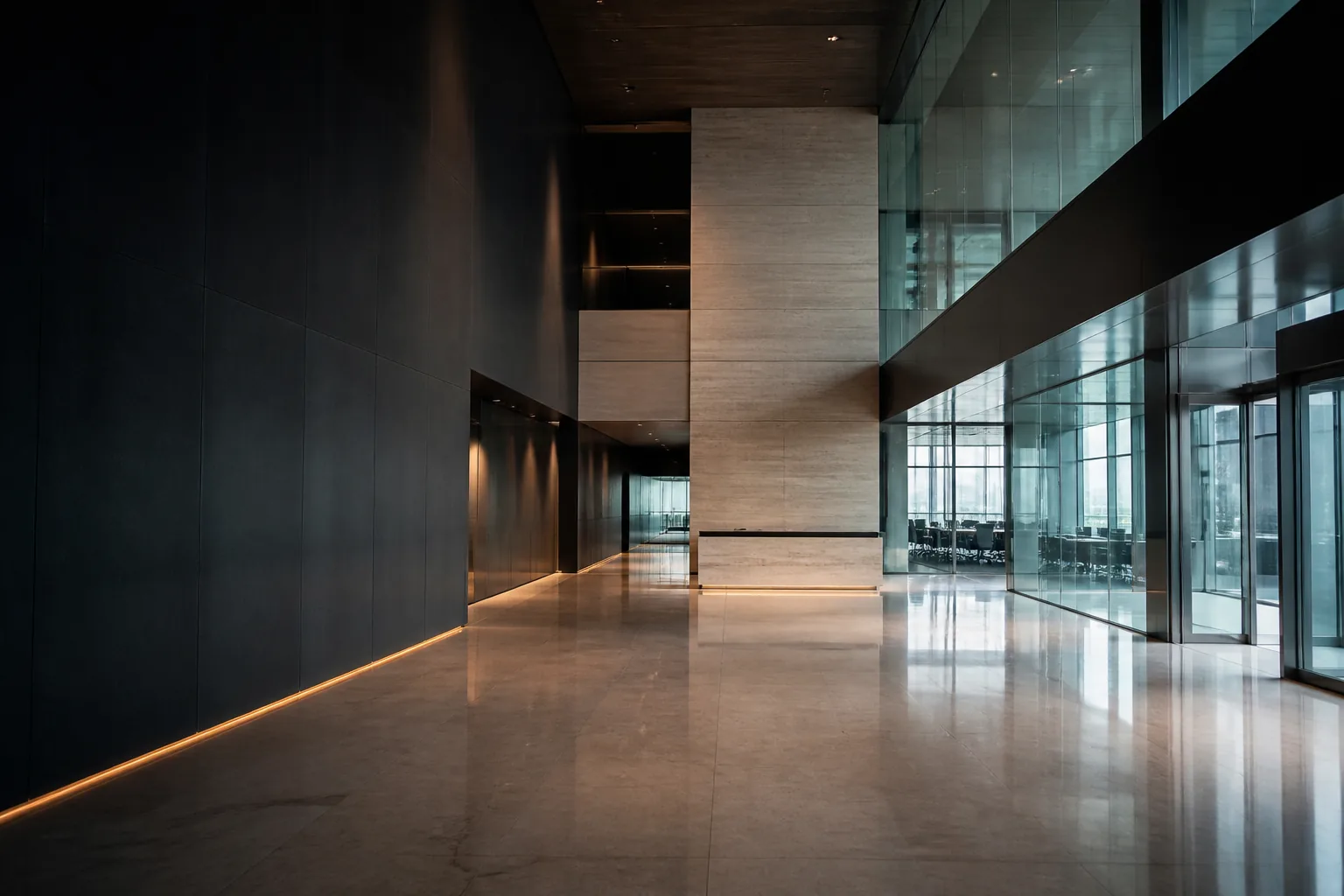
Lobby hard floors set the first impression
Hotel lobbies use hard floors that show off under daylight and lamps: porcelain or ceramic tile, natural stone, terrazzo in older buildings and luxury vinyl in many renovated properties. Each takes its own routine. Tile and stone are cleaned with neutral chemistry and their grout kept up, while finished surfaces are scrubbed, burnished and recoated to hold their sheen.
Wear starts at the doors and runs to the front desk, the elevator bank and the bar or breakfast room. Luggage wheels add their own tracks along that path. Watching where the lobby dulls first sets the routine, whether the lobby is new porcelain or terrazzo poured when the building opened.
Marble or terrazzo that has lost its shine to light etching or scratches is polished back as part of our stone care, and regular scrubbing with a neutral cleaner keeps it from dulling again between polishing visits.
Corridor carpet and its traffic lanes
Guest corridors are long, narrow and lit from above, which makes every traffic lane visible. The center strip darkens first, followed by the carpet in front of elevators, ice machines, vending alcoves and the doors of the busiest rooms. Housekeeping carts leave their own tracks along the same line every morning.
Nightly vacuuming handles loose grit. Between full cleanings, interim extraction of the center lane and elevator landings keeps those zones from pulling away from the rest of the carpet, and spot treatment deals with room-service spills and coffee before they set. Full hot water extraction then resets the whole corridor on a longer cycle, and the comparison of extraction and low-moisture carpet methods explains how the two differ in a busy corridor.
Corridors laid with carpet tile rather than broadloom gain another option: a badly stained or worn tile can be swapped while the rest are cleaned. That choice changes how the carpet ages and how often a whole corridor has to be extracted.
Back-of-house routes and service areas
Behind the guest areas, service corridors, the kitchen and the housekeeping storerooms often run on resilient tile or sealed concrete. Carts, housekeeping bins and room-service trolleys cross them all day. Sealed concrete there is scrubbed on a short cycle, and resilient tile takes scrubbing with periodic recoating, or stripping and waxing once the finish wears through. A hotel kitchen follows the same nightly routine laid out in the kitchen floor degreasing plan.
The service elevator landing deserves special attention, because soil from the loading dock and the back of house spreads from there to every guest floor. Keeping that link clean protects the corridors upstairs, and a short scrub there after the morning housekeeping run does more for the guest floors than its size suggests.
Scheduling around guests
A hotel never fully closes, so floor work follows occupancy. Overnight hours suit lobby scrubbing and burnishing in sections, with part of the lobby roped off and a clear path left to the front desk. Check-out mornings and the busiest check-in hours are left alone, and corridors are done floor by floor when occupancy runs lightest.
Extraction leaves carpet damp, so corridors need time to dry before guests roll luggage along them. Working one floor or wing at a time, with signage and a dry path, keeps rooms in service. Guest rooms themselves are extracted in planned blocks, held out of inventory until the carpet dries.
Noise matters too. Overnight lobby work uses quieter machines and starts in areas away from ground-floor rooms, and corridor work on guest floors fits the midday hours when most guests are out. Sharing occupancy forecasts and quiet periods lets the schedule follow the hotel’s own rhythm.
Planning the whole property
A hotel combines most floor types under one roof: lobby stone or tile, corridor carpet, ballroom and meeting room carpet, breakfast-area flooring, pool-side tile and back-of-house resilient floors. Hotel and managed property floor care lists each of them separately, and every area gets its own method and interval.
Every quote begins with a walkthrough of the property, and price and scheduling are settled before service. For managed portfolios with several hotels or residential buildings, one inquiry brings all of them into a coordinated plan, and the multi-property floor care guide shows how to schedule them together.
A few useful answers
Quick answers.
When should hotel lobby floors be cleaned?
Overnight, in sections, with a clear path kept open to the front desk. Check-out mornings and the main check-in hours are left alone.
How long are hotel corridors out of use after carpet extraction?
Until the carpet dries, which is why corridors are done one floor or wing at a time with a dry path left for guests.
How are guest room carpets scheduled for extraction?
In planned blocks of rooms taken out of service on low-occupancy days, so the carpet dries before the next guests check in.
Why does corridor carpet look worse than the guest rooms?
Every guest, cart and luggage trolley crosses the corridor, while each room sees only its own occupants. The center lane and elevator landings carry the most soil.
Services