
Guide
Car dealership floor care: showroom gloss, service drive and tire marks
A Roseville dealership row or a Bakersfield auto mall showroom is on display every hour the doors are open, and the floor sits in the background of every vehicle photo. This guide covers how the showroom, service drive and customer areas are each kept in shape, and how the work fits around a sales floor that seldom closes; the full service is on our dealership and showroom floor care page.
Request a quoteCall (408) 533-0557
Know what the showroom floor is made of
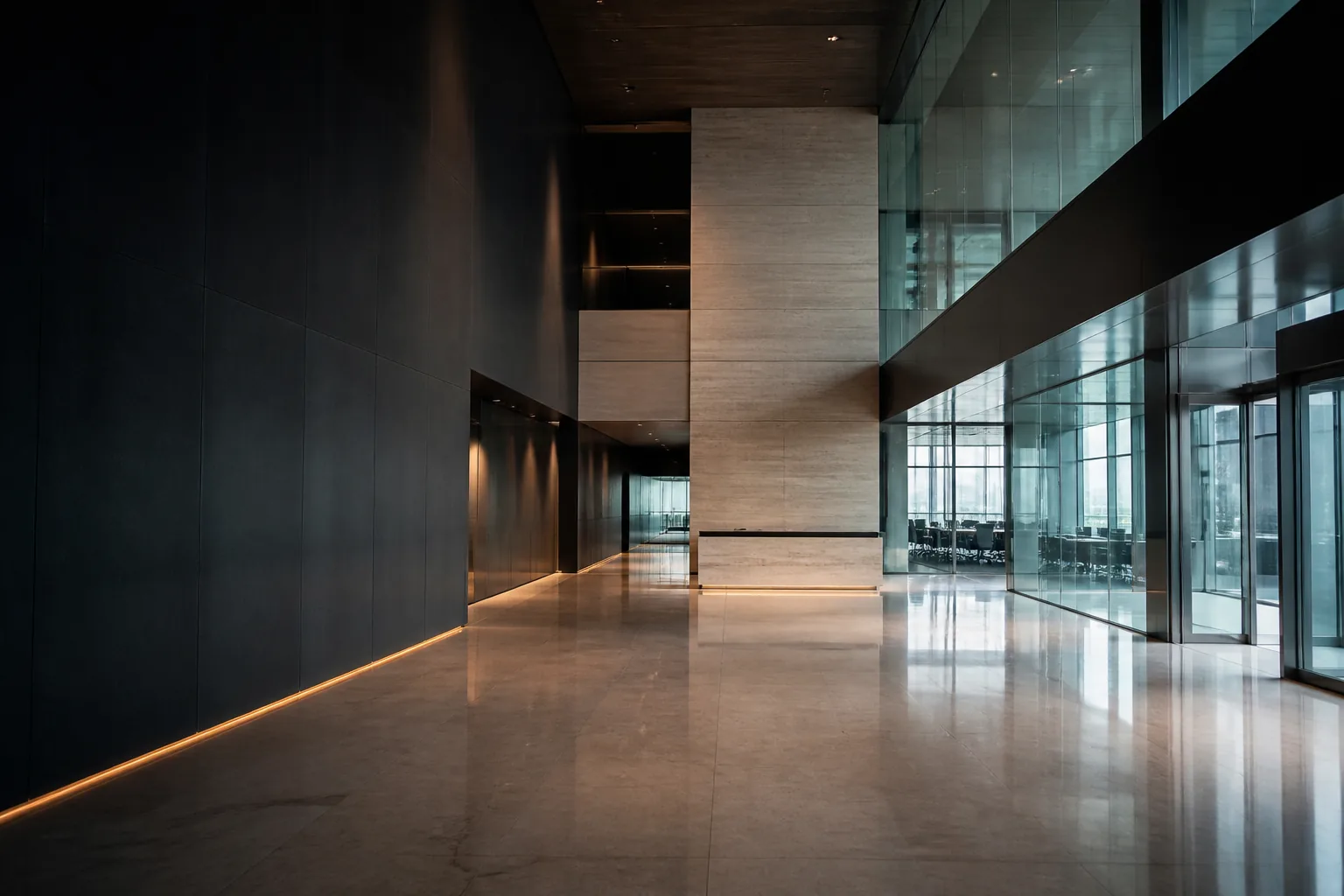
Showroom floors are chosen to look good under bright light, and that choice shapes their care. Large-format porcelain tile is common in newer showrooms, where the gloss belongs to the tile itself. Polished concrete carries its sheen in the ground surface of the slab. Older buildings and smaller stores often have resilient tile under a floor finish, where the shine comes from the finish and has to be kept up.
Each of those wants a different routine. Porcelain is scrubbed and its grout looked after, with no coating involved. Polished concrete is scrubbed with neutral cleaners and polished with pads made for it, and a slab that has lost its cut needs regrinding, which is specialist diamond work. Finished resilient tile is scrubbed, burnished and recoated.
Naming the surface on the walkthrough comes before any method, since the wrong pad or chemistry can dull a floor that exists to shine. Auto dealership and showroom floor care plans each surface separately, so the showroom, service lane and offices each get the method that fits.
Keeping showroom gloss even
Showroom wear concentrates in a few places: the path from the front doors to reception, the aisles between display vehicles and the ground around sales desks. Those paths dull first, and a floor that gleams at the edges but looks flat down the middle reads as worn in every picture.
On finished resilient floors, regular scrubbing followed by burnishing restores the sheen along the walking paths, and a recoat goes down before the finish wears through. The floor burnishing guide explains pads, speeds and burnishing intervals. On porcelain and polished concrete, routine scrubbing clears the dust and shoe soil that leave the surface looking hazy.
Display vehicles complicate the work. The floor under and around parked cars is serviced when vehicles rotate or move for the night, and the edges around tires get detail work by hand. Coordinating vehicle moves with the sales team keeps the whole floor even instead of leaving outlines where cars stood.
Tire marks on showroom floors
Vehicles driven onto the showroom leave marks at the entry doors and wherever they turn into position. Fresh rubber marks come off porcelain or a sound finish with ordinary scrubbing and a suitable cleaner. Marks left for weeks, or pressed into a soft finish, take more work and sometimes a spot recoat.
A few habits keep the count down. Clean tires before a car comes inside, roll it across a clean runner on the way in, and avoid turning the wheels while the car sits still on the floor. Those steps leave far fewer marks for the next scrub to lift.
Service drive and shop floors
The service drive takes a different beating. Customer cars roll in straight off the road with wet tires, brake dust and the odd drip of oil or coolant, and they stop in the same spots every day. The concrete there darkens in lanes and blotches, and that soil tracks into the service lounge and back toward the showroom.
Concrete floor scrubbing is the routine method for the drive and service bays, with pad, cleaner and rinse matched to whether the slab is bare, sealed or coated. Fresh drips should be soaked up and removed right away by the service team, because oil that sinks into bare concrete leaves a stain that scrubbing lightens but seldom erases.
Since the drive is busiest in the morning when customers drop off, scrubbing fits after close or on the slowest weekday evening, with time for the concrete to dry before the first car arrives. Larger parts warehouses behind the store follow the lane-by-lane approach in the warehouse floor care guide.
Customer lounges, offices and exterior entries
Customer lounges, finance offices and sales cubicles often have carpet or carpet tile. Coffee stations and waiting areas collect spills, and the path from the service desk to the lounge carries soil in from the drive. Hot water extraction and spot treatment keep those rooms in step with the showroom.
Outside, the walk from the customer lot to the front doors pushes grit and gum toward the showroom glass. Pressure washing the entry walks and the service lane approach keeps that soil away from the floor that matters most.
Dealerships keep long hours and open on weekends, so the plan follows the store’s calendar: showroom work after close, service drive work on a quiet evening and larger jobs such as a recoat on a holiday closure. Price and scheduling for each area are confirmed before the work starts, and one inquiry covers every surface on the lot.
A few useful answers
Quick answers.
How do you keep a car showroom floor shiny?
Scrub the walking paths regularly, then burnish or polish to suit the surface, and recoat a finished floor before its finish wears through.
How are tire marks removed from a showroom floor?
Fresh marks lift with scrubbing and a cleaner suited to the surface. Older marks pressed into a finished floor take extra passes and occasionally a spot recoat.
Should the service drive follow the showroom’s cleaning schedule?
Seldom. The drive takes road soil and drips every day and runs on its own scrubbing interval, while the showroom follows the wear in its walking paths.
When is the right time to work on dealership floors?
After close for routine showroom and service drive work, with recoats and larger jobs saved for holiday closures when vehicles can be moved and the floor left to cure.
Services