
Guide
Floor burnishing explained: speed, pads, gloss and timing
In lobbies, corridors and showrooms, burnishing is the step that keeps a finished floor glossy between refinishes. This guide covers how a burnisher differs from a buffer, which pads to use, how to prepare the floor and how often each area should be burnished.
Request a quoteCall (408) 533-0557
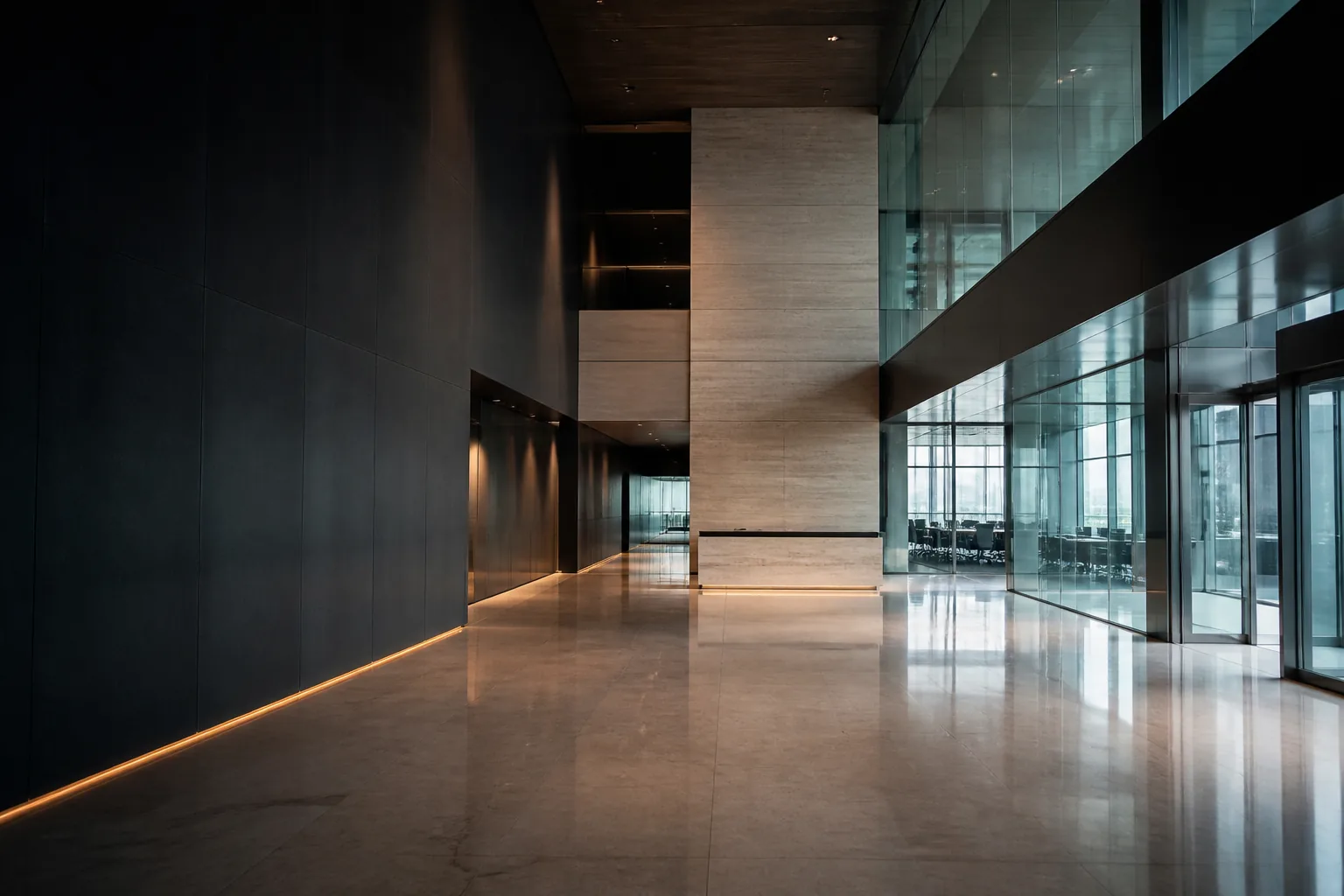
What burnishing does to a finished floor
Facility managers usually spot the need for burnishing before they know its name. The finish in a busy lobby or main corridor is still there, but foot traffic has etched it with countless fine scratches, and those scratches scatter light so the floor reads flat and gray. Burnishing makes that surface smooth again.
A burnisher spins a pad fast enough to create friction heat at the floor. The heat softens the very top of the finish just enough for the pad to level the scratches and tighten the surface, and the floor starts reflecting light again. Nothing new goes down; the gloss comes from reworking the film already in place.
That is why burnishing belongs only on floors with a finish made to respond to high speed, typically the polymer finishes used on VCT and other resilient tile. Bare tile, ceramic, unsealed concrete and most factory-finished luxury vinyl gain nothing from it. Every hard floor care visit starts by confirming which finish a floor carries.
Burnishing versus buffing: a matter of speed
People use the two words as if they meant the same thing, but the machines are different tools. A standard floor machine, often called a buffer, turns slowly; Tennant notes that most run at about 175 revolutions per minute. Burnishers spin many times faster, and a UCLA ergonomics guide places them at 1,500 to 3,000 RPM.
The slow machine is a workhorse for scrubbing, stripping and spray buffing, where a light mist of restorer is worked in with a pad as the operator swings the machine from side to side. Spray buffing removes scuffs and lifts some gloss, yet it cannot reach the depth of shine that high-speed heat produces.
A burnisher is steered forward in straight, overlapping passes instead of being swung. Walk-behind models handle corridors and lobbies, while ride-on burnishers cover large retail floors and long school hallways in fewer passes. Each pass at that speed does far more work, so a high-speed machine brings a large lobby up to gloss much faster than a buffer could.
Choosing the right pad
Pad choice decides how much the burnisher cuts and how much it polishes. Pad makers grade burnishing pads by aggressiveness, usually with color, and blends containing natural hair produce the deepest gloss on softer finishes. Harder finishes, and floors marked by heavy scuffing, respond to a firmer pad that cuts slightly more.
A mismatch shows quickly. A pad too aggressive for a soft finish leaves swirls and haze, while a pad too gentle for a hard finish spins without raising the gloss. Pads also load up with finish and soil as they run, so they are flipped or swapped during the job instead of being used until they glaze over and start dragging residue across the floor.
Preparation decides how long the shine lasts
Burnishing a dirty floor grinds grit into the finish and leaves it duller than before, so preparation always comes first. The floor is dust mopped, then scrubbed or damp mopped with a neutral cleaner and left to dry completely. Residue from a harsh cleaner smears under the pad and clouds the result.
After the passes, the fine powder raised by the pad is dust mopped away. Many burnishers carry a dust skirt or an onboard vacuum to capture it, which matters in clinics and schools where airborne dust is unwelcome. Foot traffic can return as soon as the last pass ends, because nothing wet has been applied.
Burnishing has a limit set by how much finish remains. Each pass works the top of the film, and once the lanes have thinned, the heat has little left to work with. When burnishing no longer brings the shine back, the floor is ready for a recoat or refinish, compared in the guide to stripping versus recoating.
How often to burnish each area
Traffic sets the interval. A hotel or office lobby that takes visitors all day loses its gloss quickly and responds well to frequent, light burnishing, while a side corridor or a classroom wing holds its look far longer. The rainy months shorten every interval, because wet grit carried in from parking lots scratches the finish faster.
The practical test is to look along the main walking line with light from a window or ceiling fixture behind it. Where the reflection breaks into haze and scuff lines while the floor beside the lane still looks crisp, that lane is due. Setting the rhythm area by area, rather than burnishing the whole building on one schedule, keeps quiet rooms from being worked more than they need.
Solum Cleaning plans burnishing together with scrubbing and recoating for each floor, so the three steps support each other. Lobbies and showroom floors on display all day, like those described on the dealership and showroom floor care page, sit at the short end of the rhythm.
A few useful answers
Quick answers.
What is the difference between burnishing and buffing a floor?
Speed and purpose. A buffer turns slowly and handles scrubbing and spray buffing, while a burnisher spins far faster to heat and polish the finish to a high gloss.
Which floors should not be burnished?
Floors without a compatible finish, such as ceramic and porcelain tile, bare concrete and most factory-finished vinyl. Burnishing needs a polymer finish that responds to heat.
Why is there fine dust on the floor after burnishing?
The pad polishes away a tiny amount of finish as it works. Dust mopping right after the passes clears that powder, and machines fitted with a dust skirt catch most of it.
How soon can people walk on a floor after burnishing?
Straight away. It is a dry process, so the area reopens as soon as the machine moves on and the dust has been cleared.
Services