
Guide
What office floor care includes, room by room
An office in a San Francisco tower or a San Jose campus building changes floor type several times between the front door and the kitchen. This guide walks through each room, what its floor needs on a regular cycle, what comes around less often and what to tell us before the first visit.
Request a quoteCall (408) 533-0557
Entry, reception and elevator lobbies
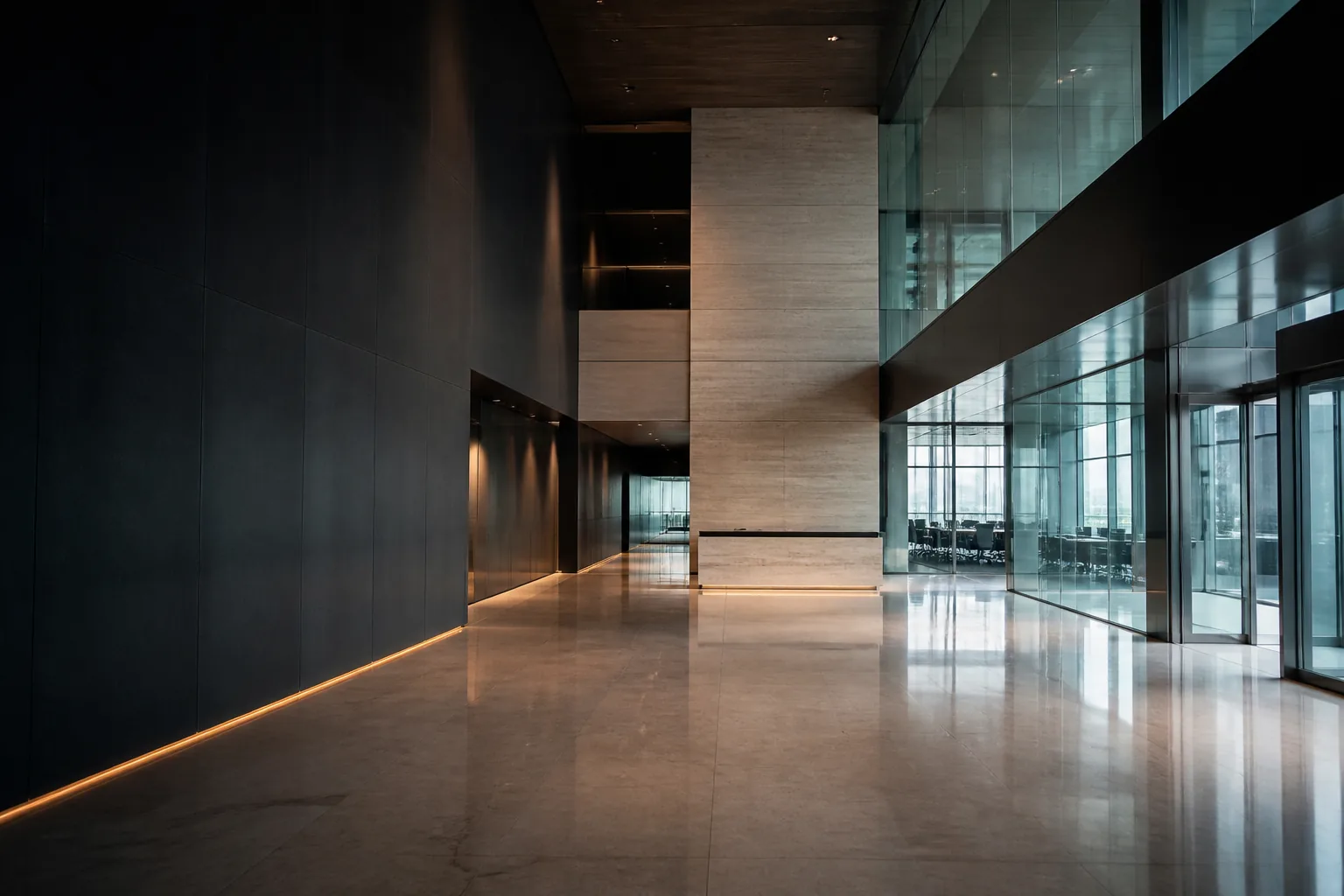
The first stretch of floor inside the door takes the most grit, and in Bay Area towers that grit comes in from sidewalks, garages and transit stops all day. Reception floors are usually a finished hard floor or tile, and visitors judge the whole office by how they look.
Routine care here is scrubbing to lift tracked-in soil and burnishing or polishing to restore the sheen of a compatible finish. A recoat goes on when the finish has thinned but still holds. Tile entries get tile and grout cleaning when the joints have turned darker than the tile faces.
Elevator lobbies on tenant floors follow the same logic at a smaller scale. They funnel everyone toward the suite door, so the path from the elevator to reception dulls first and sets the interval for the whole area. Commercial hard floor care explains each maintenance step in more depth.
Open workstations and private offices
Most office carpet sits in workstation areas and private offices, and its wear follows the aisles. Carpet under desks stays close to new while the aisle to the printer and the kitchen flattens and darkens. Hot water extraction pulls out the soil that has settled deep in the pile, and spot treatment handles coffee, ink and toner marks between extractions.
Chair zones deserve a note of their own. Rolling chairs grind soil into a small patch of carpet under each desk, and chair mats on hard floors trap grit along their edges. Point those spots out during the walkthrough so they are part of the plan from the start.
Private offices and quiet rooms usually sit on the longest cycle, since few people cross them. Grouping them with the busier aisles on one visit keeps the whole floor looking even. The commercial carpet cleaning page describes how extraction is carried out.
Meeting rooms and conference suites
Conference rooms swing between empty and packed. A boardroom that hosts a catered lunch every week collects crumbs and drink spills under the table, while a small huddle room can go months without a mark. Carpet in these rooms gets spot treatment for what lands under the table and extraction once the area around the chairs looks darker than the edges.
Some newer offices put resilient plank or polished concrete in their meeting rooms. Resilient floors are scrubbed and maintained for their finish, and concrete is scrubbed with a method chosen for its coating. Blocking the room calendar for a quiet evening gives the floor time to dry before the next meeting.
Kitchens, breakrooms and restrooms
The office kitchen is where the floor usually switches back to a resilient material, because it handles spills near the sink, refrigerator and coffee machine. That floor gets regular scrubbing to keep sticky soil from building up, burnishing to restore the finish in the main path, and stripping and waxing once the finish has worn through around the counters.
Restroom floors are most often ceramic or porcelain tile. Mopping between visits keeps the faces clean, but grout absorbs soil and moisture and slowly turns dark. Tile and grout cleaning resets both faces and joints, and restrooms beside the kitchen or the lobby tend to need it first.
Routine visits and periodic work
On a regular visit, the work centers on the busiest surfaces: scrubbing and burnishing the reception and kitchen floors, plus spot treatment on carpet in the main aisles. Periodic work comes around on a longer cycle set by wear: carpet extraction across the work areas, recoating hard floor finishes, tile and grout cleaning in restrooms, and stripping and waxing when a finish can no longer be maintained.
Keeping the routine work steady stretches out the periodic jobs. A reception finish that is burnished on time holds up longer before it needs a recoat, and carpet that has its spots treated promptly goes further between extractions.
What to tell us before the first visit
We begin each quote by touring the space, and it goes faster when you bring a few details. Mention the hours the office sits empty, which rooms host clients, the stains or worn lanes that bother you most, and whether other suites or buildings belong in the same request. Price and scheduling are confirmed before service.
For setting intervals across the whole building, see how often commercial floors should be cleaned. The office floor care page shows how carpet, hard floors and concrete inside one office are planned together under a single request.
A few useful answers
Quick answers.
How often does office carpet need hot water extraction?
Watch the aisles. When the main walking lanes look darker or flatter than the carpet under the desks, extraction is due, and busy floors reach that point sooner than quiet ones.
Should the office kitchen floor follow the same schedule as the carpet?
Rarely. A kitchen’s resilient floor takes spills every day and usually needs scrubbing and burnishing more often than the carpeted work areas around it.
Which floor problems should we show you on the walkthrough?
Show the stains, worn lanes and dull spots that bother you most, and say when each room can be left empty. Those details shape both the method and the timing.
Can the reception floor be done on a different night from the work areas?
Yes. Each area is scheduled on its own, so the reception finish can be burnished before a client visit while carpet extraction waits for a weekend.
Services