
Guide
Pressure washing entries, walkways and dumpster pads
At a retail center, a restaurant or an office park, the concrete outside the door takes the first and heaviest soil on the property. This guide covers how each exterior area gets dirty, how washing is matched to the surface, and how to plan timing and wash water around a working business.
Request a quoteCall (408) 533-0557
What builds up on each exterior surface
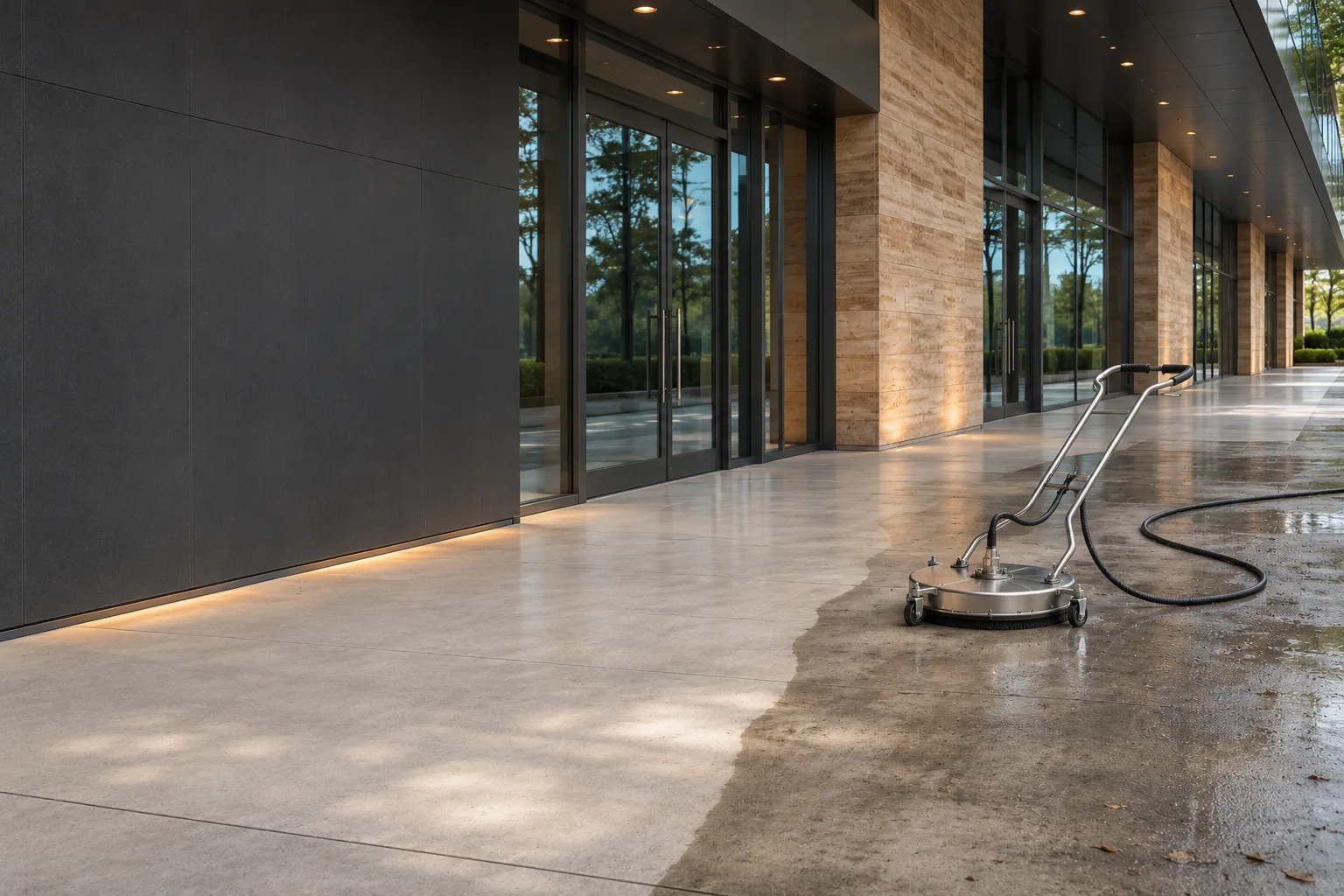
Exterior concrete never soils evenly. The apron at a storefront door collects dust, spilled drinks and the grey film left by thousands of shoe soles. Walkways along a row of shops pick up food spills and leaf and berry drop from the plantings. Gum flattens into dark discs wherever people wait: beside doors and benches, at bus stops and on the patio outside a coffee shop.
Service areas carry a different load. A dumpster pad holds leaked food waste, grease and liquid from torn bags, which soaks into the concrete and sours in warm weather. Drive-through lanes collect oil drips under idling cars at the menu board and the pickup window, plus tire marks on the turns. Loading approaches see hydraulic fluid, pallet splinters and shrink wrap.
Naming each area and its soil in the request matters, because a gum-spotted storefront and a greasy dumpster pad call for different pre-treatment, pressure, water temperature and dwell time even though both are concrete. The commercial pressure washing assessment starts from that list.
Matching the wash to the surface
Broom-finished concrete takes more pressure than the stamped, colored or sealed concrete found at many newer storefronts and restaurant patios. A sealer or decorative coating can scar or lift under a nozzle held too close, so any coating is identified before washing and the pressure is set to suit it. Pavers, stone thresholds and painted curbs each get their own approach too.
Rotary surface cleaners give flat concrete an even result without the striping that single wand passes leave behind. Wands handle edges, steps, curbs and the corners of dumpster enclosures. Heated water helps with grease and gum, softening both so they release with less pressure and less risk of etching the surface.
Gum and oil need pre-treatment. Gum softens under heat and a gum-specific product before a focused pass lifts it. Oil drips get a degreaser and dwell time; old, deep stains lighten with each treatment rather than vanishing in one visit, which is worth telling tenants before the first wash.
Dumpster pads and drive-through lanes
Dumpster pads deserve their own schedule. Grease and food waste left on the pad draw flies and pests, and the hauler’s tires spread it onto the surrounding asphalt. Washing right after collection day is the simplest timing: the bins are at their lightest for moving, and the pad is clean before the next load arrives.
Drive-through lanes suit a late closing shift or the early hours before opening, since the lane has to close while it is washed and while it dries. Restaurants in Visalia or Clovis with late-night drive-throughs often have the narrowest gap between the last car and the breakfast rush, so the lane gets its own slot in the plan, apart from the storefront walk.
Pairing the exterior with interior work keeps soil from walking straight back inside. Washing a restaurant’s entry and the path to its dumpster on the same night as the kitchen and dining room floors lets the whole route dry together; restaurant and food-service floor care covers the interior side of that night.
Planning wash water and drainage
Wash water is the part of exterior cleaning that local rules address most closely. City stormwater fact sheets for California businesses, built on the state’s stormwater best management practice handbook, tell operators to block the storm drain when pressure washing dumpster areas, sidewalks and common areas, and to keep wash water out of storm drains by collecting it for the sanitary sewer or a pervious surface. The same guidance says to contact the local sewer authority about pretreatment before any wash water goes to the sanitary sewer.
In practice that shapes the job. Dry sweeping and litter pickup come first, so solids never reach the water. Drains near the work are noted first, absorbent goes down on heavy oil before washing, and the washing is planned to protect nearby storm drains. Dumpster pads, with their grease and food residue, are where that care counts most.
Property managers speed this up by marking storm drain inlets, sewer cleanouts and planted areas on a site map, and by sharing any stormwater guidance the city or the property’s own plan has issued. With that map in hand, wash-water handling is settled before the first nozzle opens.
Setting a washing schedule
Frequency follows soil and visibility. A main entrance at a busy center or a restaurant patio shows soil fastest and earns the shortest cycle, while side walkways and staff entrances hold up longer; the commercial pressure washing cost guide turns those intervals into a budget. Dumpster pads in hot Central Valley summers, from Bakersfield up to Stockton, sour faster than coastal ones and move to a tighter interval in the warm months.
Time the washing to the business. Storefront aprons are washed before opening or after close, with the area coned off until it dries so wet soil never reaches the interior floor. Walkways shared by several tenants can be done in sections, so every store keeps an open path to its door, an approach that suits shopping center and retail properties.
A few useful answers
Quick answers.
How often should a storefront entrance be pressure washed?
Busy entrances and patios need the shortest cycle, and side walkways far less. When the grey film and gum spots return near the door, the next wash is due.
Can old gum and oil stains be removed completely?
Fresh gum and oil lift well with heat and pre-treatment. Old oil that has soaked deep into concrete lightens over repeated treatments, which is why stain locations are noted before the first visit.
What timing works for washing a dumpster pad?
Right after the hauler empties the bins, so the pad is clean before the next load and the containers are light enough to move.
Where does the wash water go on a commercial site?
The washing is planned to protect nearby storm drains. Drains and slopes are noted on the walkthrough, and that plan is set for each property before work starts.
Services