
Guide
Entrance Matting and the First Stretch of Floor
Most of the soil that wears down a commercial floor walks in through the front door, and the mats at that door decide how far it travels.
Request a quoteCall (408) 533-0557
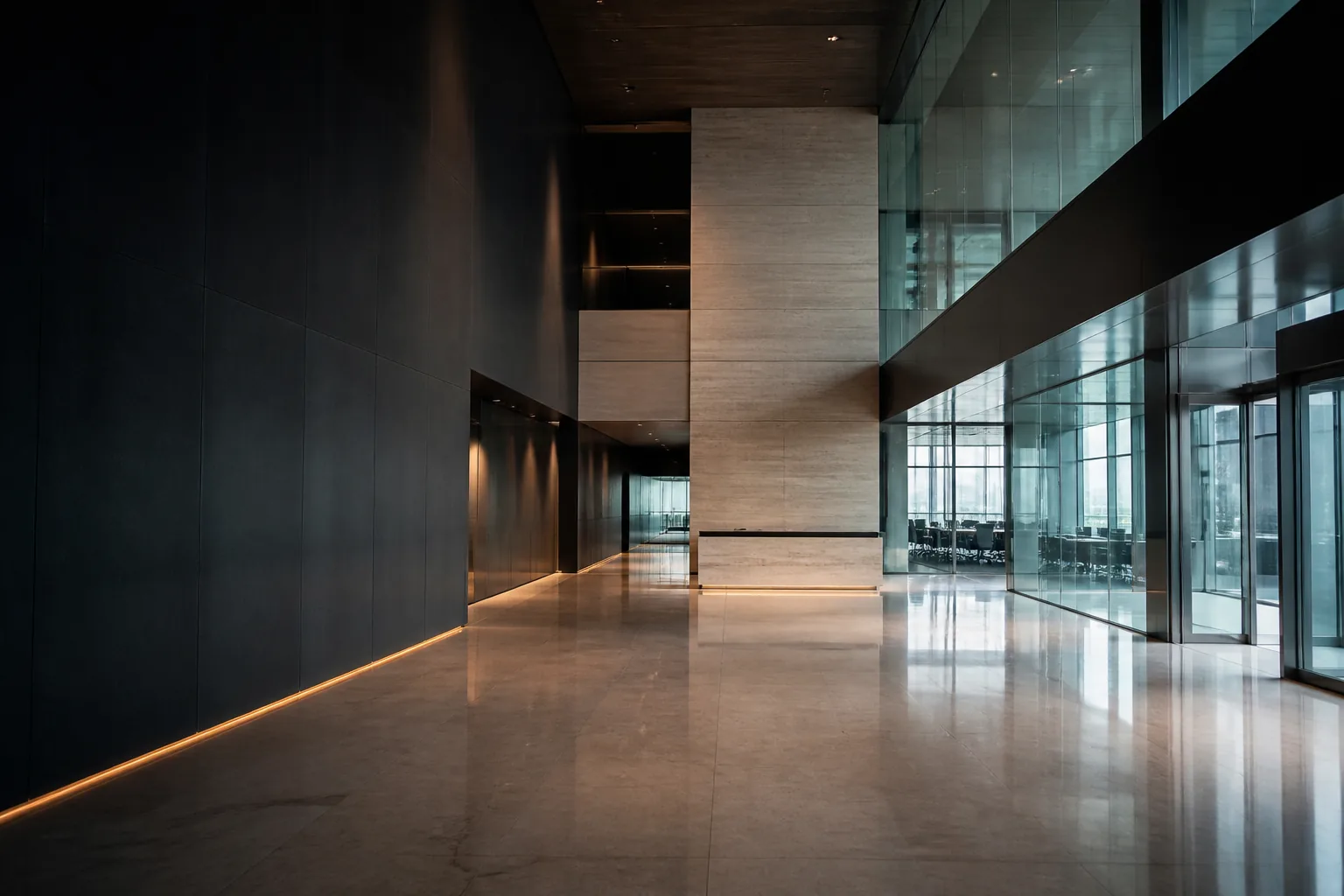
Where floor wear starts
Ask a property manager where a building’s floor looks worst and the answer rarely changes: just inside the main entrance. Grit from parking lots, dust blown in from Central Valley fields and wet soil from a Bay Area rainy season all ride in on shoes, and the floor nearest the door takes the brunt of it. The finish there scratches and dulls, grout darkens, and carpet greys long before the rooms beyond.
Matting is the simplest layer of floor protection a building has, and the one most often undersized. A single short mat at the door catches a little soil and passes the rest inward. A matting plan that gives every visitor enough steps to shed grit and moisture keeps much of that soil off the floor behind it.
Whether you buy, rent or lease your mats, here is how to size, place and look after them. The floor past the mats is where commercial floor care takes over.
Three zones of matting
A complete entrance system uses three kinds of mat in sequence. Outside, a scraper mat of rubber or coarse ridges knocks off grit, gravel and mud. In the vestibule, a scraper-wiper mat combines ridges with fiber to take off finer soil and start drying shoes. Inside, a wiper mat of absorbent fiber catches the last moisture and dust before the finished floor or carpet begins.
Length matters as much as quality. The U.S. Green Building Council’s LEED v4 reference guide calls for permanent entryway systems at least 10 feet long, built from permanently installed grates, grilles, slotted systems that can be cleaned underneath, or rollout mats. That figure makes a sound minimum for any busy entrance, and doors facing parking lots or open to driving rain earn longer runs.
Width counts too. A mat narrower than the doorway lets people step around it, and a run that ends before the first turn in the walking path leaves that turn to carry the soil. Lay mats across the full door width and along the route people actually walk.
Placement and safety
A mat protects the floor only while it lies flat. Curled corners, rippled backing and sliding edges trip people and trap soil underneath. Recessed mat wells and permanent grates avoid most of that, and rubber-backed rollout mats need edges that sit tight to the floor.
Accessibility rules reach permanent matting as well. The 2010 ADA Standards for Accessible Design limit carpet and carpet tile pile to ½ inch and call for exposed edges to be fastened to the floor with trim along their full length. Changes in level between ¼ inch and ½ inch must be beveled, which is worth checking wherever a mat or mat frame meets the floor.
Moisture under a mat is a quieter problem. A soaked mat left on a finished floor for days softens and clouds the finish beneath it. Lift interior mats when they are saturated and let the floor underneath dry before putting them back.
Keeping mats doing their job
A mat full of soil has stopped working and starts handing grit to the floor beyond it. Vacuum interior wiper mats daily in busy buildings, with extra passes during wet weather. Shake out or sweep scraper mats outside, and clear the debris from recessed wells and grates on a set schedule, since soil piles up beneath them out of sight.
Rental and lease services swap soiled mats for clean ones on a regular route; owned mats need deep cleaning on a cycle the facilities team sets. Either way, retire a mat once its fibers have flattened or its ridges have worn smooth, because a worn mat looks present yet catches little.
The walkway outside feeds the mats. Pressure washing entrance walkways and plazas clears the ground-in grime and gum that shoes would otherwise carry onto the scraper mat.
Caring for the floor past the mats
Even a well-matted entrance needs more frequent floor care than the rooms behind it. On a finished resilient floor, the entry zone is scrubbed and burnished on the shortest cycle in the building and recoated as soon as the finish thins there. Tile entries get tile and grout cleaning when the joints turn darker than the faces, and entry carpet gets extraction on its own interval, with carpet tile or broadloom each handled for its backing and seams. Polished stone lobbies follow their own routine, set out in the marble and natural stone and terrazzo guides.
Solum’s walkthrough takes in the entrances: the soil coming in, the mats in place and the wear pattern on the floor beyond them. Price and scheduling are confirmed before service, and one request covers the entry floors along with the rest of the property.
A few useful answers
Quick answers.
How long should commercial entrance matting be?
The LEED v4 reference guide uses 10 feet as the minimum for a permanent entryway system, and busy or rain-exposed doors benefit from longer runs that combine scraper and wiper mats.
Should mats stay on a finished floor all the time?
Interior mats stay in place as long as they are kept clean and lifted when soaked, so the finish underneath can dry. A wet mat left for days clouds the finish.
Why is the floor just past our mats still wearing out?
Usually the mats are too short, too narrow, overdue for cleaning or worn flat. Extending the system and cleaning it more often cuts the grit that reaches the floor.
Does pressure washing the entrance walkway help the floors inside?
Yes. A clean walkway sends less grit and gum onto the scraper mats, so the mats hold more of what remains and less reaches the floor.
Services